Turn over almost any perfume box in Pakistan and you will find a short block of small print: Alcohol, Parfum (Fragrance), Linalool, Limonene, Coumarin and a few names that look more like a chemistry exam than a description of a beautiful scent. Most buyers skip it. Yet those few lines can tell you a surprising amount about what you are putting on your skin, whether the product looks properly made, and what to watch for if your skin is sensitive.
This guide explains perfume ingredients in plain language: what each common label term means, why some names appear on almost every bottle, and how to use the ingredient list as a practical tool when you buy perfume in Pakistan.
Why the ingredient list matters
A perfume’s description tells you how it is meant to smell. The ingredient list tells you what is actually in the bottle. The two answer different questions, and a careful buyer reads both.
- Transparency: a brand that prints a full, correctly written ingredient list is showing it follows cosmetic labelling conventions.
- Sensitive skin: if you already know a particular fragrance substance irritates you, the label is where you will find it.
- Spotting fakes: missing, misspelt or oddly formatted ingredient lists are one of the easier warning signs of a counterfeit or careless product.
How a perfume label is written
Ingredients on cosmetics, perfumes included, are written using a standard naming system called INCI, the International Nomenclature of Cosmetic Ingredients. It exists so the same substance carries the same name on a label in Lahore, London or Dubai. That is why you see “Parfum” rather than “fragrance oil”, and Latin or chemical names rather than everyday words.
Two conventions are worth knowing:
- Order matters. Ingredients are generally listed starting with the largest amount. In an Eau de Parfum, alcohol almost always comes first.
- “Parfum” is a blend, not a single ingredient. The fragrance itself, often dozens or even hundreds of individual materials, is grouped under one word. Brands are not expected to publish the full formula, which is treated as a trade secret, much like a family recipe.
The main perfume ingredients, explained
Alcohol
Perfume alcohol is a purified, specially treated ethanol. It is the carrier: it dissolves the fragrance oils, helps the scent spread when you spray, and then evaporates within moments. That first sharp, cool lift you notice right after spraying is the alcohol leaving the skin. If a perfume still smells harsh long after that, our guide to why some perfumes smell harsh or cause headaches explains what may be going on.
Parfum (Fragrance)
This single word is the heart of the bottle: the perfumer’s composition of natural extracts and aroma materials. The amount of parfum relative to alcohol is what separates an Eau de Parfum from an Eau de Toilette. If you want to understand concentration in more detail, read EDP vs EDT in Pakistan.
Water and other supporting ingredients
Some perfumes also list water (Aqua), colourants or UV filters that help protect the liquid from light. Not every perfume contains these, and their absence is not a problem in itself.
Why names like Linalool and Limonene appear on so many labels
After “Parfum” you will often see a run of specific names. These are individual fragrance substances that international cosmetic rules, most notably in the European Union, ask brands to name on the label when they are present above set levels. They are listed because a small number of people are sensitive to them, not because they are unusual or harmful to most wearers. Many occur naturally in flowers, citrus peel and spices, and they are found across the fragrance industry, from everyday soaps to luxury perfume.
Here is what some of the most common ones are, in simple terms:
- Linalool: a fresh, soft floral-woody material found naturally in lavender, coriander and many flowers.
- Limonene: a bright citrus material found in orange and lemon peel.
- Citral: a sharp, lemony material found in lemongrass and lemon oils.
- Citronellol and Geraniol: rosy, slightly green materials associated with rose and geranium.
- Coumarin: a warm, sweet, hay-like material associated with tonka bean.
- Eugenol and Isoeugenol: warm, clove-like spicy materials.
- Hydroxycitronellal: a soft, airy floral material.
- Alpha-Isomethyl Ionone: a powdery, violet-like material.
- Benzyl Benzoate: a faint, balsamic material that also helps other ingredients blend.
A few modern names also appear frequently. Tetramethyl acetyloctahydronaphthalenes is a smooth, dry woody material widely used in contemporary perfumery, and Hexamethylindanopyran is a clean, soft musk. Rose ketones are fruity, rosy materials.
One important point: seeing a name on the label does not tell you how a perfume smells. A material can be present in a tiny amount, or play a supporting role you would never pick out by nose. To understand how a scent is built and how it unfolds over time, our guide to top, heart and base notes is a better starting point.
Natural vs synthetic: does it matter?
Many buyers assume “natural” means better or gentler. In perfumery, that is not quite true. Natural essential oils are themselves made up of the same kinds of substances listed above: lemon oil naturally contains limonene and citral, for example. Carefully made synthetic materials, meanwhile, allow perfumers to create scents that nature cannot provide on its own, keep a fragrance consistent from batch to batch, and avoid relying on scarce plant or animal sources.
A good perfume is about the skill of the composition and the quality of its materials, not a simple natural-versus-synthetic label.
How to read the label on an Elijah perfume
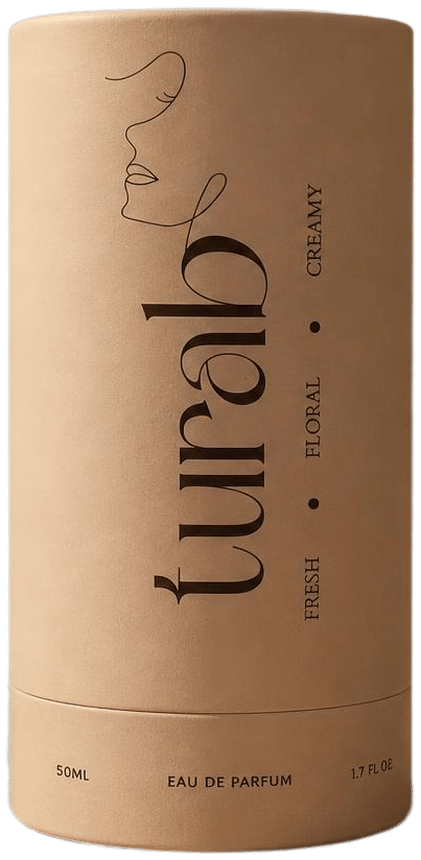
Every Elijah Perfumes product page shows the ingredient list in full, under Ingredients, alongside a short description of the fragrance’s character. Take Turab as an example. Its character is described as floral, fresh and creamy. Its label reads:
Alcohol, Parfum (Fragrance), Alpha-Isomethyl Ionone, Benzyl Benzoate, Citral, Citronellol, Coumarin, Eugenol, Geraniol, Hydroxycitronellal, Isoeugenol, Jasmine Oil/Extract, Linalool, Rose ketones, Tetramethyl acetyloctahydronaphthalenes, Hexamethylindanopyran, Limonene.
Reading it with what you now know: alcohol comes first as the carrier, followed by the parfum blend, and then the individually named fragrance substances. The character line tells you how the perfume is meant to feel; the ingredient list tells you what to check if you have a known sensitivity. You can compare all five characters in the Elijah collection.
Sensitive skin? A few sensible precautions
Most people wear perfume every day without any trouble. If your skin is reactive, or you have reacted to fragrance before, a little caution goes a long way:
- Check the label first. If a dermatologist has told you to avoid a specific substance, look for it by name.
- Patch test. Apply a small amount to the inner forearm and leave it for a day or two before wearing it more widely.
- Avoid broken or freshly shaved skin. Spray on intact, moisturised skin rather than on irritated areas.
- Be gentle with delicate fabrics. If you prefer to keep perfume off your skin, test a hidden spot first, since some fabrics can mark.
- Stop if you react. Wash the area with mild soap and water, and speak to a doctor if redness, itching or swelling continues.
Nothing in this guide is medical advice. If you have a diagnosed allergy or a skin condition, ask your doctor or dermatologist before trying a new fragrance.
Using the label to avoid fake perfume
Counterfeit perfume is a real problem in Pakistan’s online market, and the box is often the first place a fake gives itself away. Be wary of an ingredient list that is missing entirely, full of spelling mistakes, printed in a blurry font, or that does not match the list on the brand’s own website. Our guide on how to avoid fake perfume in Pakistan covers the other warning signs, from suspicious pricing to sellers with no clear policies.
It also helps to know a brand’s policies before you order. At Elijah Perfumes, unopened items in their original sealed packaging may be returned or exchanged within 3 business days of delivery, while opened or sprayed bottles cannot be returned for a change of mind; items that arrive damaged, defective or incorrect should be reported within 48 hours. The full details are in our Return & Refund Policy.
Frequently asked questions
What are the main ingredients in perfume?
Most perfumes are made mainly of alcohol, which carries the scent, and “parfum”, the fragrance blend itself. Many labels then list individual fragrance substances, such as linalool or limonene, that cosmetic rules ask brands to name.
Why does perfume contain alcohol?
Alcohol dissolves the fragrance oils, helps the scent spread evenly when sprayed, and evaporates quickly, leaving the fragrance on your skin.
What does “Parfum” mean on an ingredient list?
It is the standard label term for the complete fragrance composition. The individual materials inside it are not usually published, because the formula is treated as a trade secret.
Are linalool and limonene bad for you?
They are widely used fragrance substances that also occur naturally in plants and citrus fruit. They are named on labels because some people are sensitive to them. If you have a known sensitivity, check the list and patch test first.
Does the ingredient list tell me how a perfume smells?
Not really. It shows what is in the bottle, not how the materials are balanced. For how a fragrance smells, read its character description and notes, and wear it on skin through the day.
Where can I find the ingredients of Elijah perfumes?
Each product page lists the full ingredients under the Ingredients section. If you have a question about a specific fragrance, you can contact our team Monday to Saturday, 10 AM to 7 PM PKT.